


Executive Summary:
- Why Traditional Protection Is Not Enough: Modern organizations rely on interconnected digital environments, cloud services, external partners and AI tools to operate. Traditional security measures remain essential, but organizations also need to consider how they maintain control over confidential information as it is accessed, used and shared.
- Understanding Persistent Data Protection: Persistent data protection focuses on maintaining appropriate protection and usage controls throughout the data lifecycle. Related practices, including protecting data at rest, in transit and in use, form part of the broader cybersecurity approach to safeguarding sensitive information.
- Maintaining Control After Sharing: Organizations should evaluate capabilities such as granular access controls, restrictions on document usage, permission changes, access revocation and activity monitoring. These capabilities can help maintain control over confidential documents when collaboration involves external parties.
- Persistent Protection as Part of Cybersecurity: Persistent data protection complements established security measures such as encryption, data loss prevention and identity and access management. By considering how controls apply to sensitive information throughout its lifecycle, organizations can strengthen their approach to protecting confidential data.
Table of contents
- Why Traditional Data Protection Is Not Enough
- What the State of Data Protection 2026 Report Reveals
- What Is Persistent Data Protection?
- Why Persistent Data Protection Matters in a Modern Cybersecurity Strategy
- Key Capabilities of a Persistent Data Protection Strategy
- Persistent Data Protection in Practice: Maintaining Control Over Shared Documents
- Conclusion: Maintaining Control Over Confidential Data Throughout Its Lifecycle
Why Traditional Data Protection Is Not Enough
Organizations rely on a range of security measures to protect confidential information, including encryption, access controls, network security and data loss prevention (DLP). These measures play an essential role in reducing the risk of unauthorized access and data exposure. However, protecting the systems where information is stored or the channels through which it is transmitted does not always guarantee that the same level of control can be maintained once the information is shared.
Sharing information outside an organization is often essential to business operations. Companies need to collaborate with suppliers, business partners, customers and other third parties to carry out their activities. Public sector organizations also need to exchange information with external entities to deliver services and coordinate their work. Isolating all sensitive data within an organization’s own environment is therefore not a realistic approach in many situations.
This challenge is becoming increasingly relevant as organizations operate across distributed environments, cloud services and complex supply chains, where information regularly moves between systems and people. Protecting the network or the original storage location remains important, but organizations also need to consider how their security controls apply to the data itself as it moves through these environments.
This is one of the reasons why cybersecurity frameworks increasingly emphasize a data-centric approach to security. The National Institute of Standards and Technology (NIST), for example, distinguishes between protecting data at rest, in transit and in use in its Cybersecurity Framework 2.0. Similarly, the National Security Agency (NSA) identifies granular data access controls and data rights management tools as relevant components of the data pillar in its Zero Trust guidance.
What the State of Data Protection 2026 Report Reveals
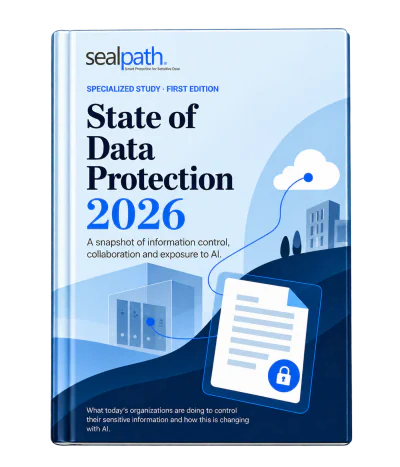
Sharing confidential information is an essential part of business operations, but maintaining control over that information after it has been shared remains a challenge for many organizations. SealPath’s 2026 State of Data Protection Report explores this gap by examining the data protection measures and control capabilities reported by security and technology professionals.
The findings highlight an important distinction: controlling who can access information does not necessarily mean retaining control over the document itself.
For example, 85% of survey participants report applying the principle of least privilege, and 69% say they can revoke access. However, only 36% can modify a document’s permissions after sending it, while just 21% report having persistent protection in place. Furthermore, only 14% say they know where copies of the information are located.
These findings point to different aspects of the same challenge. Organizations may have measures to restrict access, but fewer report having the ability to adapt document permissions after sharing or maintain persistent protection. Limited visibility into where copies are located adds another layer of complexity when trying to retain control over sensitive information.
The challenge is particularly relevant when organizations collaborate with external parties. The report found that 72% of participants share sensitive information with third parties at least occasionally. Yet only 46% say they can revoke access to shared information, and 32% can audit third-party access. These figures come from questions addressing third-party sharing specifically and should be considered separately from the report’s broader findings on access revocation.
Taken together, the results illustrate why data protection needs to go beyond deciding who can access information at a particular moment. Organizations also need to consider what happens after a document is shared, whether its permissions can be changed when circumstances evolve, and what visibility they retain over its use.
The full 2026 State of Data Protection Report explores these challenges in greater detail, including document protection, third-party collaboration, exposure of sensitive information to AI tools and data sovereignty.
Read the full 2026 State of Data Protection Report
What Is Persistent Data Protection?
Persistent data protection refers to approaches designed to keep sensitive information protected throughout its lifecycle, rather than relying solely on the security of the location where it is stored or the channel through which it is shared. This idea is closely related to recommendations from cybersecurity organizations that emphasize protecting data at rest, in transit and in use. The National Institute of Standards and Technology (NIST), for example, addresses these three states in its Cybersecurity Framework 2.0. The National Security Agency (NSA), in its guidance on maturing the data pillar of Zero Trust, also highlights granular data access controls, monitoring data access and use, and technologies such as encryption, data loss prevention (DLP) and data rights management (DRM).
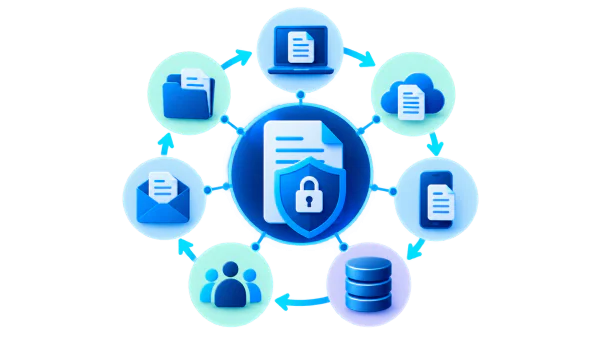
The objective: ensuring that sensitive information remains protected as it moves through an organization’s systems and workflows. Persistent data protection places particular emphasis on maintaining appropriate controls when information changes location or is shared with other people or organizations.
How Does Persistent Data Protection Relate to Zero Trust?
Zero Trust is a cybersecurity approach in which access to resources is not automatically trusted simply because a user or device is inside a particular network. Access decisions are based on explicit authorization and other relevant security conditions. Within this approach, protecting data requires more than securing the systems that store it: organizations must also consider who can access the information and how that access is controlled.
Persistent data protection fits into this broader picture by focusing on how protection and access controls can remain associated with information as it moves between environments. The precise capabilities depend on the technologies used, but the objective is to reduce dependence on the original storage location or sharing channel.
What Role Do IRM and DRM Play in Persistent Data Protection?
Information Rights Management (IRM) and Digital Rights Management (DRM) technologies, such as SealPath, can help apply access and usage controls directly to documents or other digital content. Depending on the solution, these controls may restrict who can open a file, what actions they can perform, and whether permissions can be changed or access revoked after the document has been shared.
This is particularly relevant for confidential documents that need to be exchanged with external parties. While encryption can protect information against unauthorized disclosure, rights management can add controls governing how an authorized recipient accesses or uses the protected document. These mechanisms address different security needs and can complement one another.
The NSA explicitly identifies DRM tools as one of the methods that can support data protection within the data pillar of Zero Trust, alongside encryption, tagging and labeling, and DLP strategies. This provides a practical connection between the broader recommendations for data security and technologies designed to maintain control over digital information.
Why Persistent Data Protection Matters in a Modern Cybersecurity Strategy
The way organizations create, access and share information has changed significantly. Employees work across cloud platforms, collaboration tools, business applications and external services, while organizations increasingly depend on suppliers, partners and interconnected digital ecosystems. The growing use of artificial intelligence (AI) tools adds another dimension, as employees may use these services to analyze, summarize or process information, sometimes creating new opportunities for sensitive data to be exposed.
As a result, sensitive information can be accessed and processed through a wider range of tools, services and workflows than ever before. Traditional security controls remain essential, but organizations must also consider how to manage data access and usage consistently across these different contexts. The challenge is not simply to prevent unauthorized access, but to ensure that appropriate protection and permissions remain in place as working practices, technologies and business relationships evolve.
This is where persistent data protection becomes particularly relevant to a modern cybersecurity strategy. It provides a way to maintain defined access and usage controls over sensitive information, helping organizations address the challenges created by increasingly interconnected and digital working environments.
Zero Trust provides a useful framework for understanding this need. Rather than automatically trusting users or devices because they are connected to an organization’s network, Zero Trust emphasizes explicit authorization and the continuous evaluation of access. The National Security Agency (NSA) identifies granular data access controls and monitoring as important elements of the data pillar in its Zero Trust guidance. The Cybersecurity and Infrastructure Security Agency (CISA) also highlights data protection, access controls and continuous review of permissions as part of Zero Trust maturity.
For organizations, the practical consideration is how these measures work together. A comprehensive approach should consider where sensitive data is stored, how employees and external parties access it, which tools and services process it, and what controls remain appropriate as business needs change. Persistent data protection is one way to address the need to maintain control over sensitive information in an increasingly connected digital environment.
Key Capabilities of a Persistent Data Protection Strategy
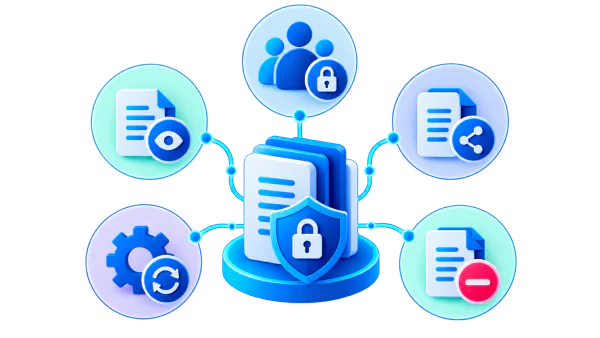
Implementing persistent data protection requires more than applying encryption to sensitive files. Organizations need to consider how access is granted, which actions recipients are allowed to perform, and how these controls can be managed as business requirements change. The specific capabilities available will depend on the technologies and solutions used, but several are particularly relevant when evaluating an approach to persistent data protection.
Granular Access Control
Organizations should be able to define who can access sensitive information and under what conditions. Access should be based on the needs of each recipient, rather than granting broader permissions than necessary. This helps limit unnecessary exposure when documents are shared with employees, suppliers, partners or other external parties.
Control Over Document Usage
Access to a document does not necessarily mean that every action should be permitted. Depending on the sensitivity of the information and the solution in use, organizations may need to restrict actions such as printing, copying or editing. These controls help align document usage with the purpose for which access was granted.
Protection for Shared Information
Protection should be designed to remain associated with the document when it is shared or stored in a different location, rather than depending exclusively on the security of the original repository. This capability is particularly relevant when confidential information must be exchanged with external parties or accessed through different working environments.
Permission Changes and Access Revocation
Business requirements can change after a document has been shared. A recipient may no longer need access, a collaboration may end, or the information may become more sensitive. Organizations should therefore evaluate whether they can modify permissions or revoke access after sharing.
These are related but different capabilities. Changing permissions allows an organization to adjust what an authorized recipient can do, while revocation is intended to withdraw access. The available options and how changes take effect depend on the solution and its configuration.
Monitoring and Visibility
Organizations should also consider what visibility they have into access to and use of protected information. Depending on the solution, activity records may help identify who accessed a document, when access occurred and which permitted actions were performed. This information can support investigations, oversight and the review of access policies.
Persistent Data Protection in Practice: Maintaining Control Over Shared Documents
Consider a company that needs to share a confidential financial report with an external supplier. The supplier requires access to review the figures and provide recommendations, but the company wants to ensure that the information is only used for its intended purpose.
With a conventional file-sharing approach, the company may be able to control access to the original repository or restrict who can download the document. However, once the file has been downloaded or stored elsewhere, the controls available may depend on the platform and the way the document was shared.
A persistent data protection approach can help address this challenge by associating protection and usage permissions with the document itself. Depending on the solution, the company may be able to define who can open the report and which actions they are permitted to perform, even when the document is accessed outside its original environment.
The situation may also change over time. Once the supplier has completed the review, the company may no longer want to allow access to the report. If the solution supports it, the company can revoke the supplier’s access or modify the document’s permissions without relying solely on removing the original shared link.
Conclusion: Maintaining Control Over Confidential Data Throughout Its Lifecycle
As organizations become more connected and rely on an increasingly diverse range of digital tools and services, protecting confidential information requires more than securing the systems and channels used to store or share it. Organizations also need to consider how access to and use of sensitive data can be controlled as business needs and working environments evolve. Persistent data protection helps address this challenge by keeping appropriate protection and usage controls associated with information throughout its lifecycle.
Understanding where organizations stand today is an important step towards improving data protection practices. SealPath’s State of Data Protection 2026 Report explores how security and technology professionals approach these challenges, including persistent protection, access revocation and the management of information shared with third parties.